Monday, March 22, 2010

French Army Groupe de Combat (Squad), 1939-40


A recent foray into Force on Force (FoF) rules (re)inspired me to find my 15mm Peter Pig and Battlefront minis for the France `40 campaign. Of course, I had to (re)familiarize myself with the arcana of French organization and armament from the period, so I thought I’d layout the groupe de combat (squad) as I understand it. This is the basic “type unit” for FoF.

1 x Squad Leader (SGT) w/MAS36 Rifle

1 x Assistant Squad Leader (CPL) w/MAS36 Rifle

1 x Machine Gunner w/FM 24/29

1 x LMG Loader w/Ruby Pistol

3 x Ammunition Carriers w/MAS36 Carbine

4 x Riflemen w/MAS36 Rifle

Rifle Grenadier w/MAS36 or Lebel 86M93 fitted w/Grenade Launcher Cup Tromblon VB

So, there were 12 EM in the squad, which could cover a front of about 50 meters on the offensive. Generally, as I understand it, the squad would be divided in two for combat, as follows:

Fire Element

Assistant Squad Leader

LMG Gunner

LMG Loader

3 Ammunition Carriers

Shock Element

Squad Leader

4 Riflemen

Rifle Grenadier

So, theoretically, you’ve got the typical base of fire and maneuver element of the interwar squad.

Sources

Borsarello, J.-F. L'Armée française de 39 à 41, ou, Le conflit deux ans trop tôt--. [Colmar]: Jérome/Do Bentzinger, 1998.

Sumner, Ian, François Vauvillier, and Mike Chappell. The French Army 1939-45 (1): The Army of 1939-40 & Vichy France. London: Osprey Publishing, 1998. (See cover illustration above.)

Sunday, February 14, 2010

New Washington, D.C. Area Gaming Group

A few of us from the Ambush Alley/Force on Force forum have started a new WDC area group for gaming AA/FoF and a variety of other rules. It looks like we'll be meeting in the Palisades area of Northwest D.C., which is convenient to close-in Northern Virginia.

Join us if this interests you.

Google Group here: http://groups.google.com/group/dc-gaming-group

Friday, February 12, 2010

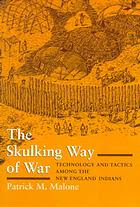
The Skulking Way of War


Malone, Patrick M. The Skulking Way of War: Technology and Tactics among the New England Indians. Lanham, Md.: Madison Books, 1991.

At just 132 pages, of which about 100 are text and the rest notes and related back matter, this is not a thick tome. But, its length belies its erudition and usefulness. In a nutshell, it examines the cultural-military encounter of Indians and whites in colonial New England in the period between the Pequot War (1636-1637) and King Philip’s War (1675-1676). At the beginning of this period, the Indians had few, if any firearms; by the end, most had flintlock muskets and carbines, like the whites. Moreover, they had effectively integrated firearms into their aboriginal, “skulking way of war” and forced the whites in response to adopt the irregular tactics they had scorned in their earlier encounters with the natives.

The author tellingly quotes the observation of one of the white leaders, made after King Philip’s War: “In our first war with the Indians [the Pequot War], God pleased to show us the vanity of our military skill, in managing our arms, after the European mode. Now we are glad to learn the skulking way of war.”

I originally wanted to read this book for insights into native weapons, organization and tactical doctrine, which it provides aplenty. In addition, I found much that was new to me on how the Indians acquired firearms, despite the most stringent prohibitions, and how the whites used native auxiliaries in their military encounters with Indian adversaries.

The book is also copiously illustrated, and the annotated footnotes are most useful, particularly if one wanted to investigate specific subjects in depth.

Saturday, January 16, 2010

Wallenstein’s Lifeguard: The Mounted Companies


Above: Sketch of a lancer of Wallenstein’s Lifeguard (K. A. Wilke)

Imperialist generalissimo Albrecht von Wallenstein (1583-1634) was one of the most compelling, enigmatic figures thrown up by the Thirty Years’ War. A Czech, he rose from relative obscurity to command a large military establishment and amass a vast fortune. When he grew “overmighty,” he was removed from command, charged with high treason, and ultimately murdered by officers loyal to the emperor.

Like most general officers of the time, he had a lifeguard unit, although in his case it was actually an establishment of foot and mounted companies that was large by any standard.

I was reminded of this recently when fellow blogger Timur at De Rohan à Turenne (http://rohanturenne.blogspot.com/) posted watercolors of the lancer company of the mounted guard, and I remembered that I had a file containing a brief article on the lifeguard. Here is the reference:

Freier, Dr. Walter. “Die Leibgarden Wallensteins.” Alte und neue Zinnfiguren, 1970 nr. 8, 165-67.

According to this article, the mounted lifeguard originally (1625) consisted of two companies of mounted arquebusiers (Simonetti and von Haugwitz). Later, this was increased to four (late 1627), and then five (1628), although the fifth company (dragoons) probably belonged to Count Ottavio Piccolomini, the commander of the lifeguard and was his own lifeguard.

The five companies together numbered 500, indicating that each company was 100 strong. From late 1628, it appears that the four actual companies of the lifeguard were one each of lancers, arquebusiers, dragoons, and Croatians. They were described as having a “magnificent” appearance. A second arquebusier company was added subsequently, increasing the number of mounted companies, including Piccolomini’s, to six.

The number of companies, horse and foot, of the lifeguard was ten when Wallenstein was removed from command in September 1630. During the period of his second Generalitate, the lifeguard consisted only of two companies of arquebusiers.

Monday, December 21, 2009

The Vedette


Here are a couple images from the fall 1974 issue of The Vedette: Journal of the National Capital Military Collectors. These depict a trumpeter of Bavarian horse, c. 1701 (cover illustration) and Bavarian cuirassier officers of the 1680s (top). The drawings were done by Jay S. Swingle, based on sketches by Dr. A. Benkert, to illustrate an article on "The Riders of the Blue King."
This was a quality journal with distinguished contributors.

Saturday, December 19, 2009

Early Italian Wars: Ratio of Espingarderos to Ballesteros


Above: 10mm Conquistador Arquebusiers from Obelisk Miniatures http://www.obeliskminiatures.com/ These are suitable for the Italian Wars.

One of my projects this winter is to work-up scenarios for several battles of the Italian Wars and part of that is to return to the age-old question of the composition of the armies, particularly those of the Early Italian Wars and the campaigns in Naples.

An early, somewhat thorny problem is the ratio of espingarderos (hand-gunners and arquebusiers) to ballesteros (crossbowmen) in the Spanish expeditionary armies. Thorny because, while most of the time the Spanish tell us how many arquebusiers were part of a particular force, the crossbowmen were counted among the pikemen.

Working from several standard sources, I was able to determine the following ratios:

The ratio of firearms to crossbows in an Imperial force organized to fight the Hussites in 1431 was 1:1

The Emperor Maximilian eliminated the crossbow in the Imperial armies in 1507.

The ratio of espingarderos to ballesteros in some later armies of the Spanish Reconquest

1483 1:6 (handguns:crossbows)
1489 1:4

This data is quite interesting when compared to the ratio in Italy a few years later. In the space of a decade, the ratio is reversed. These were the first Spanish expeditionary armies organized on the new model.

1500: 4:1
1501: 3:1

Thursday, December 17, 2009

American Artillery in the Mexican War


Dillon, Lester R., Jr. American Artillery in the Mexican War, 1846-1847. Austin, Tex.: Presidial, 1975.

“American artillery dominated the battlefields of the Mexican War. In this conflict, America’s first foreign war, a new and elite corps of artillery was blooded in the crucible of battle, and a proven combat arm emerged with firm doctrine and the eminent esteem of both the nation and its military leadership.” – from the Preface

This excellent survey is, to my knowledge, the only work that deals specifically with the subject. It is rather on the small side but written in a spare, matter-of-fact style by a retired officer who well understood the subject in all of its metes and bounds.

It has just five chapters:

I. Prelude to Conflict
II. Cannon and Cannoneers
III. Taylor’s Army of Occupation
IV. The Heartland
V. Artillery and Victory

In addition, besides front matter, it has biographical sketches of many of the officers who later became prominent in the Civil War, a glossary, bibliography, and endnotes.

Having read it, I can now understand the source of the artillery genius of the great Civil War cannoneers like Henry J. Hunt and John Pelham (who of course was too young to fight in the Mexican War but was a worthy descendant of Ringgold, Duncan, Taylor, and Washington, who took the light batteries to war in 1846-47).