The latest issue of Blue & Gray magazine (see above) examines the places and events of the Civil War in Indian Territory (modern-day Oklahoma). For an excellent synopsis of this neglected subject, see the website of the Oklahoma Historical Society:
Showing posts with label Native Auxiliaries. Show all posts
Sunday, December 18, 2011
The Civil War in Indian Territory
The latest issue of Blue & Gray magazine (see above) examines the places and events of the Civil War in Indian Territory (modern-day Oklahoma). For an excellent synopsis of this neglected subject, see the website of the Oklahoma Historical Society:
Monday, September 12, 2011
Forgotten Fights
Michno, Gregory, and Susan Michno. Forgotten Fights: Little-Known Raids and Skirmishes on the Frontier, 1823 to 1890. Missoula, Mont.: Mountain Press Pub. Co., 2008.
In this book, the Michnos (husband and wife) supplement the coverage of their earlier book, the Encyclopedia of Indian Wars (2003), with a detailed compilation covering about 300 small fights of the Indian wars during 1823-1890. These events were not included in the earlier publication. The book begins with a simple state-by-state chronology of the incidents examined. Each chronology is keyed to an outline map showing the locations of the incidents, plus rivers and forts and camps. This is followed by brief narratives of each event, in chronological order, from Skull Creek (Eagle Lake, Texas) in spring 1823 to Salt River (Globe, Arizona) on Mar. 7, 1890. In 1890, the frontier was declared “closed,” and the Indian wars ended. The authors’ brief Summary is sobering in its assessment of the enormous cost of the wars in human lives and property. The Notes, Bibliography, and Index are extensive and well-done.
Wednesday, December 8, 2010
Modern Guerrilla Warfare
Having spent the better part of the last five years or so studying and analyzing the subject, it's a pleasure to catch up with some of the earlier literature which, while appealing, hadn't seemed directly (too) useful to the work at hand. In fact, Osanka's volume is useful as representative of the thinking in the West on guerrilla warfare as it confronted the Communist threat worldwide at the time. It consists of 37 essays and case studies by scholars, experts, and military men with practical experience in all aspects of guerrilla and counterguerrilla warfare, not only in World War II and the postwar world but also in previous history. Of course, as the title indicates, the emphasis is on tactics, techniques, procedures, and policies in Soviet Russia, Communist China, the Philippines, Indochina, Laos, Vietnam, Malaya, and Cuba. The work is supported by an extensive research bibliography.
Thursday, April 1, 2010
La Florida: Field Artillery
Photos: This small piece is mounted on the standard 30mm x 30mm base recommended for TPC’s Spanish Fury, Actions! Gun and crew are, I believe, old-ish Mikes Models 15mm – another rescue from the artillery box of bits and bobs.
In general, the SF Actions! artillery rules will apply in LF tactical combat, but some changes will have to be made because of the unique circumstances that applied in the New World. First, other than Cuba and, I suspect, Mexico, horses were in short supply in the Spanish colonies, so guns typically would not be drawn by horse teams and will have to be manhandled. Second, Indians of course will not have artillery. And, third, any firing of artillery guns will strike terror into aboriginal hearts, causing reactions that in LF will be automatic and not require reference to the SF Actions! firing table. Here are the draft reactions:
1 – The targeted warband (company) will immediately make a Retire move AND have one Terror marker placed on it.
2 – All other warbands within “earshot” (i.e., which can “see” the targeted warband retire), will themselves make a Retire move and seek cover. They will, however, recover automatically when they gain cover of any kind. At a minimum, affected warbands will be all those of the war party.
3 – On succeeding turns in which the gun(s) is/are fired, only the bases adjoining the targeted base(s) will be forced to retire.
4 – No Indians in cover may be fired upon by artillery.
5 – Indigenous allies of Europeans who have at least one previous combat experience are not affected by these draft reactions.
Labels:
Artillery,
Indian Warfare,
La Florida,
Native Auxiliaries
Friday, February 12, 2010
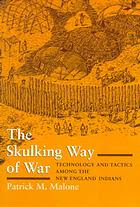
The Skulking Way of War
Malone, Patrick M. The Skulking Way of War: Technology and Tactics among the New England Indians. Lanham, Md.: Madison Books, 1991.
At just 132 pages, of which about 100 are text and the rest notes and related back matter, this is not a thick tome. But, its length belies its erudition and usefulness. In a nutshell, it examines the cultural-military encounter of Indians and whites in colonial New England in the period between the Pequot War (1636-1637) and King Philip’s War (1675-1676). At the beginning of this period, the Indians had few, if any firearms; by the end, most had flintlock muskets and carbines, like the whites. Moreover, they had effectively integrated firearms into their aboriginal, “skulking way of war” and forced the whites in response to adopt the irregular tactics they had scorned in their earlier encounters with the natives.
The author tellingly quotes the observation of one of the white leaders, made after King Philip’s War: “In our first war with the Indians [the Pequot War], God pleased to show us the vanity of our military skill, in managing our arms, after the European mode. Now we are glad to learn the skulking way of war.”
I originally wanted to read this book for insights into native weapons, organization and tactical doctrine, which it provides aplenty. In addition, I found much that was new to me on how the Indians acquired firearms, despite the most stringent prohibitions, and how the whites used native auxiliaries in their military encounters with Indian adversaries.
The book is also copiously illustrated, and the annotated footnotes are most useful, particularly if one wanted to investigate specific subjects in depth.
Subscribe to:
Posts (Atom)