
Showing posts with label Indian Warfare. Show all posts
Showing posts with label Indian Warfare. Show all posts
Wednesday, January 16, 2013
Painting U.S. Cavalry of the 1870s

Tuesday, January 15, 2013
Painting Hostiles of the Northern Plains

On Nov. 9, 2001, I
blogged on the postcard Bugle & Guidon, Inc., used in the 1970s to
publicize its 54mm figures suitable for depicting the Indian Wars of the 1870s
between the U.S. Cavalry and hostiles of the Northern Plains, including Custer’s
Last Stand (depicted on the postcard). Bugle & Guidon furnished painting
instructions with its figures, and I recently discovered copies of these
instructions tucked away with a couple of the actual figures. As these
instructions are comprehensive and informative, I thought I’d reproduce them
here. The first covers the Indians – “Hostiles of the Northern Plains.”
Sunday, August 12, 2012
Texas Rangers

Moore, Stephen L. Savage Frontier: Rangers, Riflemen, and
Indian Wars in Texas. Vol. 4: 1842-1845.
Univ. of North Texas Press, 2010.
Before reading
author Moore’s latest (and last) volume in his four-volume history of the Texas
Rangers during the Republic of Texas era, I knew relatively little of the
history of this fabled force of frontier fighters. I’m pleased to report I’ve
been educated. As indicated by the citation, the present volume details events
during 1842-1845, including two Mexican invasions of Texas (the Vasquez and
Wall incursions, both in 1842) and the fierce fighting that resulted from them.
Texan ripostes, including the Somervell and Mier expeditions, were ignominious
failures. The bitterness of the conflict, including Mexican atrocities and
maltreatment of prisoners, was such that the Rangers subsequently sought
revenge and killed Mexican soldiers and civilians with such ruthlessness that
American soldiers with whom they served in the U.S.-Mexican War were appalled. (It
is only just to point out here that many Tejanos served in the ranks of the
Rangers.)
Besides major
conflicts, the book includes accounts of everyday peacekeeping on the frontier,
chiefly the numerous fights against hostile Indians. It is worth noting that
friendly Indians sometimes served in companies alongside the Rangers. Among the
famous Rangers profiled are the legendary Capt. Jack Hays and Capt. Samuel
Hamilton Walker, who helped design the famous Walker Colt, an early revolver
that was adopted by the Rangers and the U.S. dragoons. (This was Clint Eastwood’s
pistol in The Outlaw Josey Wales.)
All in all, this book is a rewarding read. For war gamers, it will certainly
provide inspiration for skirmish scenarios readily adaptable to rules sets like
TooFatLardies’ Sharp Practice.
Sunday, December 18, 2011
The Civil War in Indian Territory


The latest issue of Blue & Gray magazine (see above) examines the places and events of the Civil War in Indian Territory (modern-day Oklahoma). For an excellent synopsis of this neglected subject, see the website of the Oklahoma Historical Society:
Wednesday, November 9, 2011
Custer's Last Stand

This diorama of Custer's Last Stand was produced by Bugle and Guidon, Inc., as a postcard to accompany its kit No. BG-18 in the mid-1970s. Constructed by Thomas E. Bookwalter, it depicts the final moments of Custer (hatless, staring at the viewer, and wearing the distictive cravat of his Civil War "Red Tie Boys") and his last companions, including his insuperably brave brother Tom (also hatless, in buckskin coat). The figures were 54mm.
Monday, September 12, 2011
Forgotten Fights

Michno, Gregory, and Susan Michno. Forgotten Fights: Little-Known Raids and Skirmishes on the Frontier, 1823 to 1890. Missoula, Mont.: Mountain Press Pub. Co., 2008.
In this book, the Michnos (husband and wife) supplement the coverage of their earlier book, the Encyclopedia of Indian Wars (2003), with a detailed compilation covering about 300 small fights of the Indian wars during 1823-1890. These events were not included in the earlier publication. The book begins with a simple state-by-state chronology of the incidents examined. Each chronology is keyed to an outline map showing the locations of the incidents, plus rivers and forts and camps. This is followed by brief narratives of each event, in chronological order, from Skull Creek (Eagle Lake, Texas) in spring 1823 to Salt River (Globe, Arizona) on Mar. 7, 1890. In 1890, the frontier was declared “closed,” and the Indian wars ended. The authors’ brief Summary is sobering in its assessment of the enormous cost of the wars in human lives and property. The Notes, Bibliography, and Index are extensive and well-done.
Friday, April 15, 2011
Fox Warrior, 1731

While browsing the superb website of the Bibliotheque nationale de France (gallica.bnf.fr) today, I came upon this striking image labeled "Guerrier Renard." It's a watercolor depicting a warrior of the Fox tribe in 1731. The Fox, an Algonquian people, were noted as warlike and appear to have been held in rather low regard by both the French and their Indian neighbors. At that time, they inhabited the region around Green Bay and Saginaw Bay in Wisconsin and Detroit in Michigan. They appear to have had the distinction of being the only tribe against which the French warred. This image represents a people rather outside the bounds of the blog, but it's so impressive, I just had to share it.
Saturday, December 18, 2010
Heath's Armies of the Sixteenth Century (1)

As you can see from the title page, this is volume 2 of Ian Heath's excellent work. This volume deals with the armed forces present in the New World, both European and indigenous. I cannot think of any comparable work and recommend it for anyone interested in the topic. It was published in 1997 and has not been superseded to my knowledge.
The book is divided into five (geographic) sections, not including the Bibliography. This last, incidentally, is quite useful, despite its seeming brevity (It is just four pages long but is set in small type and is quite comprehensive.).
Of course, my interest is with La Florida, and this is covered in the section titled "North America 1497-1608," which provides most of what I'm looking for. Specifically, sub-sections for "Florida" (pp. 123-130) and "Virginia" (pp. 130-134) are useful. "Florida" is a typical treatment. It gives a historical overview of the Spanish and French expeditions (1513-1581) and the Indian cultures of the region. This is followed by a section on warfare, including weapons and forts. Finally, Heath presents his characteristic, detailed line drawings of warriors and soldiers.
Sunday, May 9, 2010
Roanoke

Above: The English settlement at "Roanoac" (present-day Roanoke Island)
The brief existence and mysterious disappearance of Sir Walter Raleigh's colony continue to vex scholars. Roanoke was close to the northern margin of La Florida. A possible solution to the mystery of the "Lost Colony" is set forth in:
Horn, James. “Roanoke’s Lost Colony Found?” American Heritage, 60:1 (Spring 2010), 60-65.
Worth a read.
Thursday, April 1, 2010
La Florida: Field Artillery


Photos: This small piece is mounted on the standard 30mm x 30mm base recommended for TPC’s Spanish Fury, Actions! Gun and crew are, I believe, old-ish Mikes Models 15mm – another rescue from the artillery box of bits and bobs.
In general, the SF Actions! artillery rules will apply in LF tactical combat, but some changes will have to be made because of the unique circumstances that applied in the New World. First, other than Cuba and, I suspect, Mexico, horses were in short supply in the Spanish colonies, so guns typically would not be drawn by horse teams and will have to be manhandled. Second, Indians of course will not have artillery. And, third, any firing of artillery guns will strike terror into aboriginal hearts, causing reactions that in LF will be automatic and not require reference to the SF Actions! firing table. Here are the draft reactions:
1 – The targeted warband (company) will immediately make a Retire move AND have one Terror marker placed on it.
2 – All other warbands within “earshot” (i.e., which can “see” the targeted warband retire), will themselves make a Retire move and seek cover. They will, however, recover automatically when they gain cover of any kind. At a minimum, affected warbands will be all those of the war party.
3 – On succeeding turns in which the gun(s) is/are fired, only the bases adjoining the targeted base(s) will be forced to retire.
4 – No Indians in cover may be fired upon by artillery.
5 – Indigenous allies of Europeans who have at least one previous combat experience are not affected by these draft reactions.
Friday, February 12, 2010
The Skulking Way of War
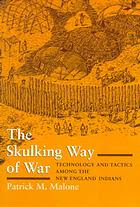
Malone, Patrick M. The Skulking Way of War: Technology and Tactics among the New England Indians. Lanham, Md.: Madison Books, 1991.
At just 132 pages, of which about 100 are text and the rest notes and related back matter, this is not a thick tome. But, its length belies its erudition and usefulness. In a nutshell, it examines the cultural-military encounter of Indians and whites in colonial New England in the period between the Pequot War (1636-1637) and King Philip’s War (1675-1676). At the beginning of this period, the Indians had few, if any firearms; by the end, most had flintlock muskets and carbines, like the whites. Moreover, they had effectively integrated firearms into their aboriginal, “skulking way of war” and forced the whites in response to adopt the irregular tactics they had scorned in their earlier encounters with the natives.
The author tellingly quotes the observation of one of the white leaders, made after King Philip’s War: “In our first war with the Indians [the Pequot War], God pleased to show us the vanity of our military skill, in managing our arms, after the European mode. Now we are glad to learn the skulking way of war.”
I originally wanted to read this book for insights into native weapons, organization and tactical doctrine, which it provides aplenty. In addition, I found much that was new to me on how the Indians acquired firearms, despite the most stringent prohibitions, and how the whites used native auxiliaries in their military encounters with Indian adversaries.
The book is also copiously illustrated, and the annotated footnotes are most useful, particularly if one wanted to investigate specific subjects in depth.
Subscribe to:
Posts (Atom)
